Call Center Outsourcing Services: Trends, Technologies, and Industry Insights
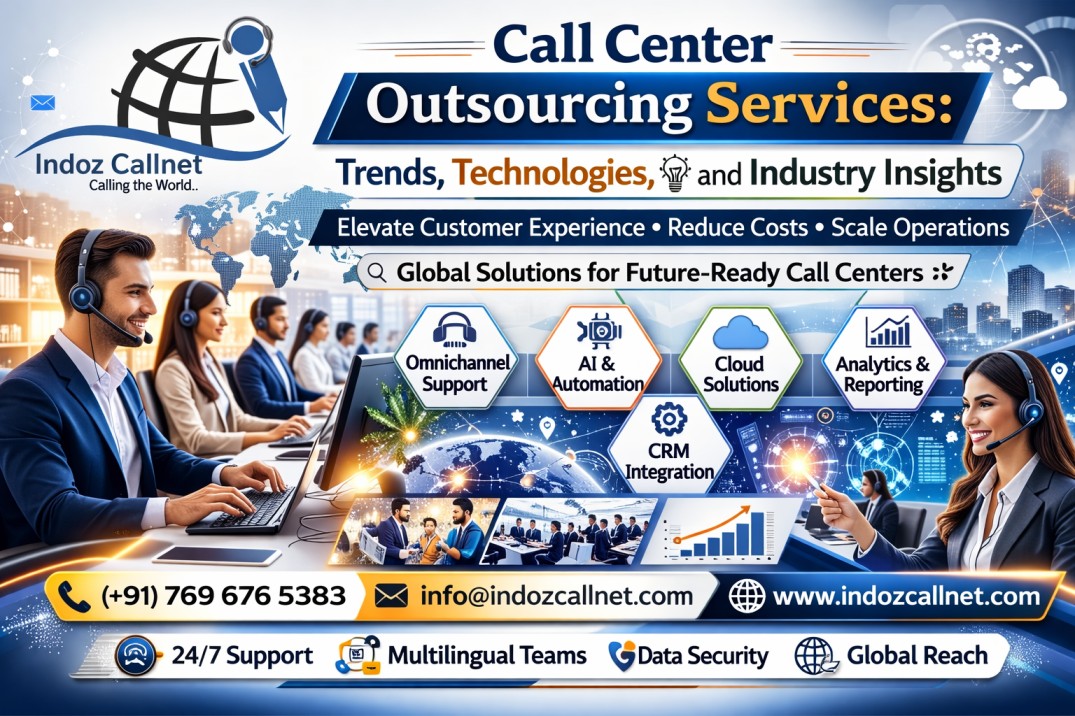
Today, customer expectations are evolving faster than ever, and customers are seeking faster responses, personalised service, and effective communication across multiple channels. Many businesses struggle to meet these demands with internal teams alone, which is why outsourcing customer support has become a key part of modern business strategy.
This article explores the latest trends, emerging technologies, and industry insights shaping outsourced customer support and how companies can benefit from these changes.
Growing Demand for Outsourced Customer Support
Most businesses across industries use call center outsourcing services to fulfil customer demands, drive sales, and manage back-end business processes. It is beneficial for businesses to minimize their expenditure by using these services without adding more workforce.
The rise of e-commerce, global expansion, and the need for 24/7 support are driving this demand. Companies operating in different regions benefit from outsourcing because it enables them to provide support in multiple languages and at any time.
Outsourcing providers bring experience and proven methods that help businesses offer steady service quality. As customer experience becomes increasingly important, outsourcing is becoming a smart investment.
Key Trends Shaping the Outsourcing Industry
Omnichannel communication is one of the main trends in customer service outsourcing. Businesses must be reachable via phone, email, live chat, social media, and message services. These channels are being integrated by outsourcing companies to create a single platform that enables agents to efficiently interact with clients and track past interactions.
Another important trend is the rise of remote and hybrid workforce models. Outsourcing companies are hiring agents from different regions and allowing them to work remotely. This approach increases access to skilled talent and reduces operational costs. It also improves business continuity, as distributed teams are less affected by local disruptions.
Personalization is now a top priority. Businesses want agents to know each customer’s history, preferences, and behaviour. Outsourcing providers use data and analytics to help agents provide more tailored answers and suggestions, leading to happier, more loyal customers.
Technologies Transforming Outsourced Call Centers
Technology is key in today’s outsourced operations. Cloud-based contact center platforms enable agents to work from anywhere with secure access. These platforms bring voice, chat, email, and social media together in one place, making work more efficient and speeding up responses.
Customer relationship management systems, or CRMs, are used to store customer data, track interactions, and handle service requests. These tools help agents see customer history and solve problems faster. CRMs also offer reports that help businesses track performance and spot trends.
Artificial intelligence is becoming a major part of outsourced customer support. Chatbots handle common inquiries, freeing agents to focus on complex issues. AI-driven analytics tools analyze conversations to identify customer sentiment, common problems, and performance gaps. Automation tools reduce manual tasks such as data entry and ticket routing, improving productivity.
Workforce management tools help outsourcing providers predict call volumes, schedule agents, and track productivity. These tools make sure there are enough agents during busy times and help control costs when things are slower.
Industry Insights from Global Outsourcing Markets
The outsourcing industry is growing in North America, Europe, and Asia. Many businesses choose call center companies in Canada for their strong language skills, cultural fit with North American customers, and high service standards. Canadian providers are known for their high-quality support, regulatory compliance, and systems.
Outsourcing providers are no longer limited to providing voice support; some also offer technical support, order processing, data entry services, lead generation, and customer retention. Businesses can outsource these services to a single partner, making their operations more efficient and organised.
Outsourcing is no longer just for big companies. Small and medium-sized businesses are also outsourcing customer support to compete with larger brands. Flexible pricing and scalable solutions make outsourcing possible for businesses of any size.
Benefits of Modern Outsourcing Solutions
Outsourcing customer support has many benefits for businesses. The main advantage is saving money, since companies do not have to hire, train, or keep large in-house teams. Outsourcing providers also offer predictable pricing, which helps businesses manage their budgets.
Scalability is another big benefit. Businesses can increase or decrease support as needed, without spending on extra infrastructure. This flexibility is especially helpful for seasonal businesses or those growing quickly.
Getting access to skilled talent is another major advantage. Outsourcing providers hire and train agents with specialised skills, such as technical know-how, sales experience, and the ability to speak multiple languages. This lets businesses offer great support without running large training programs themselves.
Challenges and How the Industry Is Responding
Outsourcing has its challenges, too. It can be hard to maintain consistent quality across large teams, especially when agents work remotely. Outsourcing providers tackle this by monitoring quality, offering training, and tracking performance. Regular feedback and coaching help agents keep up service standards.
Data security is also a big concern. Businesses share sensitive customer information with outsourcing providers, so keeping it safe is very important. Providers use secure networks, encryption, and access controls to protect data. Following regulations and industry standards is now a must for outsourcing partnerships.
Cultural differences and language barriers can affect how the agent interacts with customers. Outsourcing companies provide language training to ensure effective communication with people from different regions of the world.
The Future of Outsourced Customer Support
The future of outsourced customer support will be shaped by automation, personalization, and digital transformation. AI-powered tools will continue to handle routine inquiries, allowing agents to focus on complex tasks that require human understanding. Predictive analytics will help businesses anticipate customer needs and improve proactive support.
Virtual assistants and voice recognition technology will become more common, improving self-service options for customers. Businesses will also use data insights to design better customer journeys and improve retention strategies.
Sustainability and ethical practices will play a larger role in outsourcing decisions. Businesses are increasingly evaluating outsourcing providers based on labour practices, environmental policies, and corporate responsibility.
Choosing the Right Outsourcing Partner
It is very important to consider the technology, experience, security, and scalability of the outsourcing company. It is also important for a company to consider the outsourcing company’s experience and track record. To build trust and ensure everyone is working towards the same goals, reporting is crucial.
Companies that work with Canadian call centers often get high service standards and strong regulatory compliance. Still, businesses should compare several providers and choose one that aligns with their customer experience goals and budget.
Conclusion
Outsourced customer support is changing with new technology, rising customer expectations, and global growth. Companies that keep up with trends and use modern outsourcing can boost customer satisfaction, cut costs, and grow more easily.
By staying up to date on new technologies and industry insights, organisations can make better outsourcing decisions and remain competitive in a fast-changing market.
Frequently Asked Questions
They are services provided by third-party companies that handle customer support, sales calls, technical support, and back-office tasks for businesses.
Major trends include omnichannel support, remote workforce models, AI-driven automation, and personalized customer experiences.
Common technologies include cloud contact center platforms, CRM systems, AI chatbots, analytics tools, and workforce management software.
Businesses outsource to reduce costs, improve scalability, access skilled talent, and provide 24/7 customer service.
Companies should evaluate experience, technology infrastructure, security measures, scalability, communication practices, and industry expertise before selecting a provider.